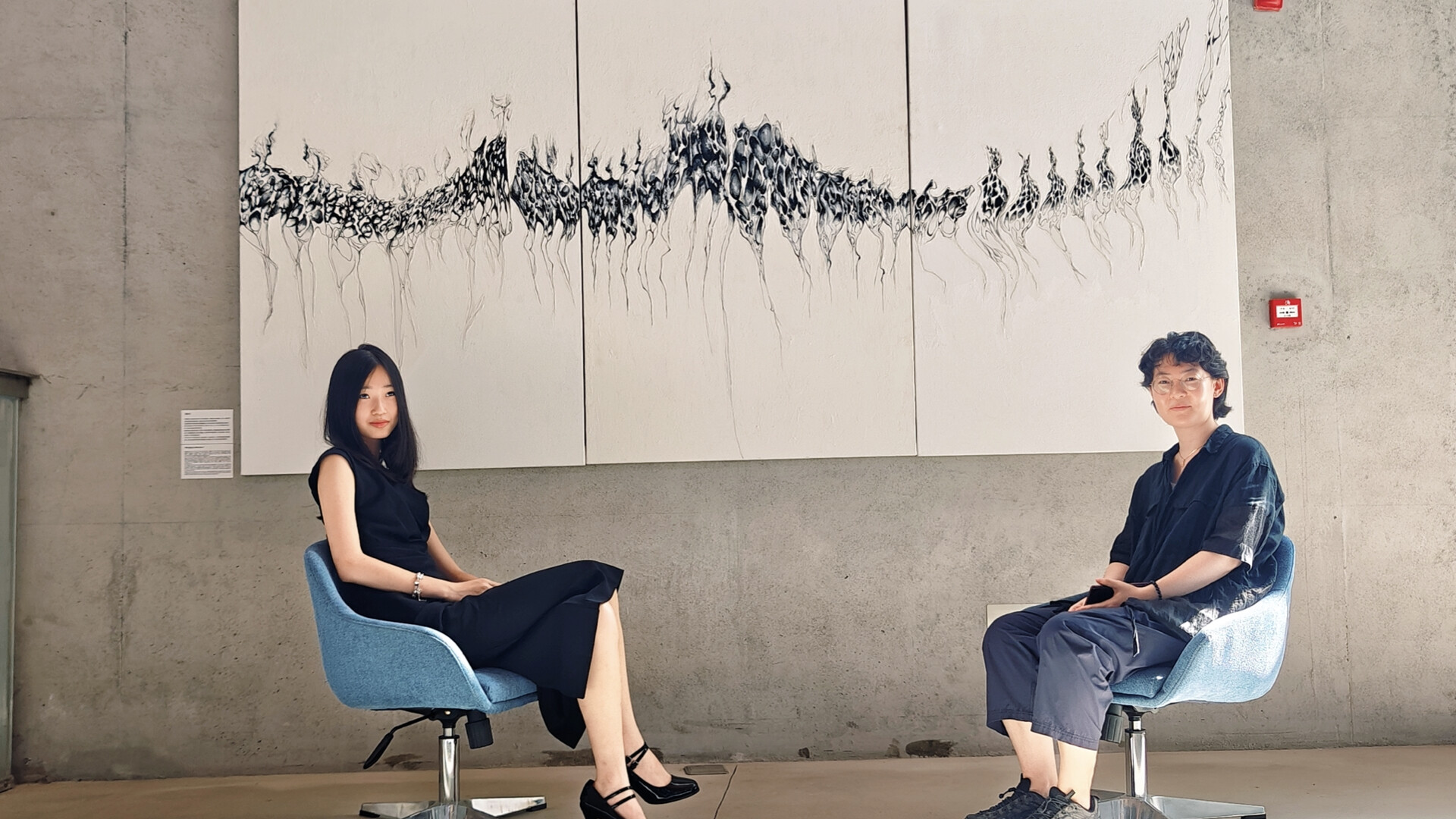


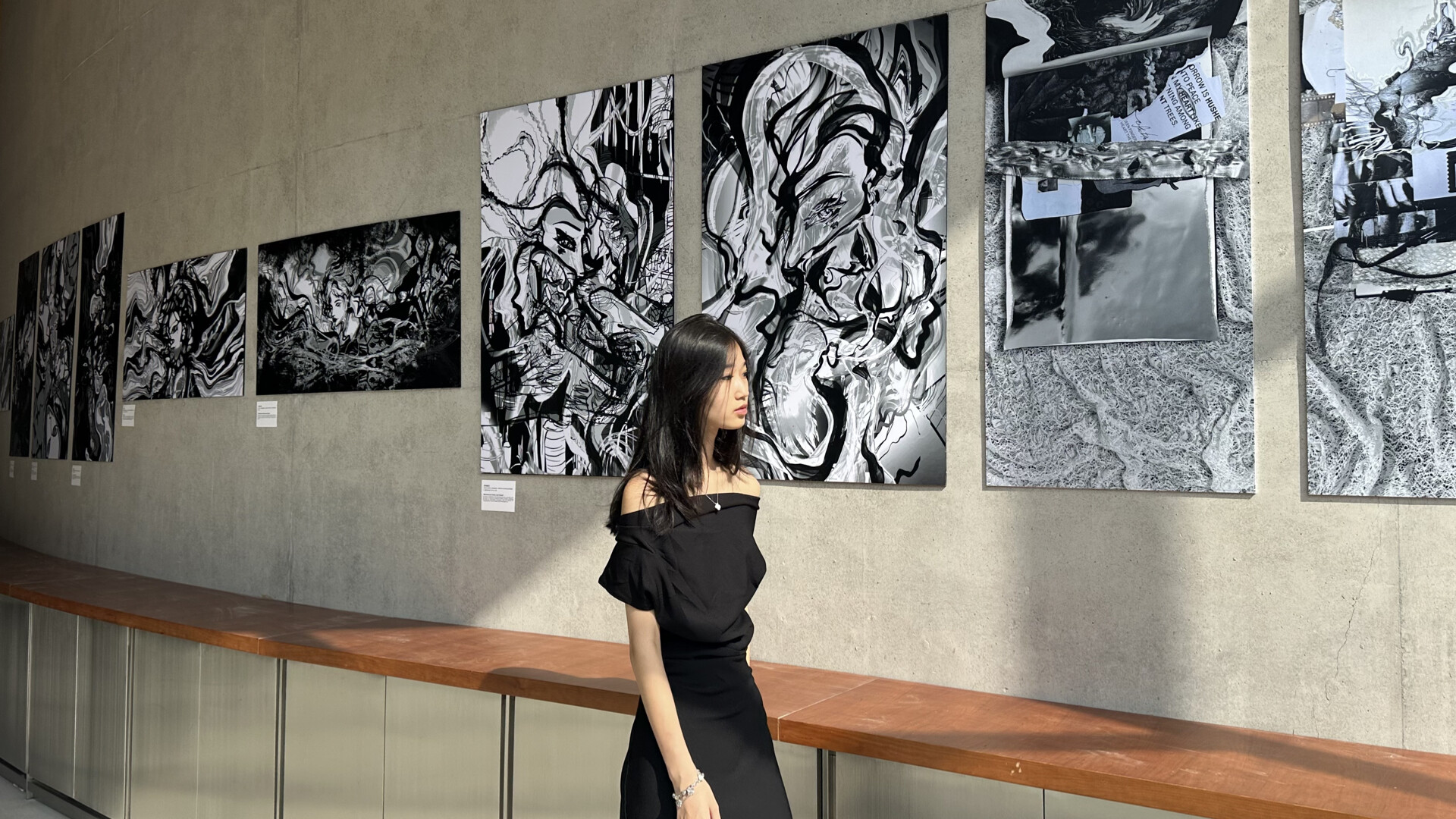
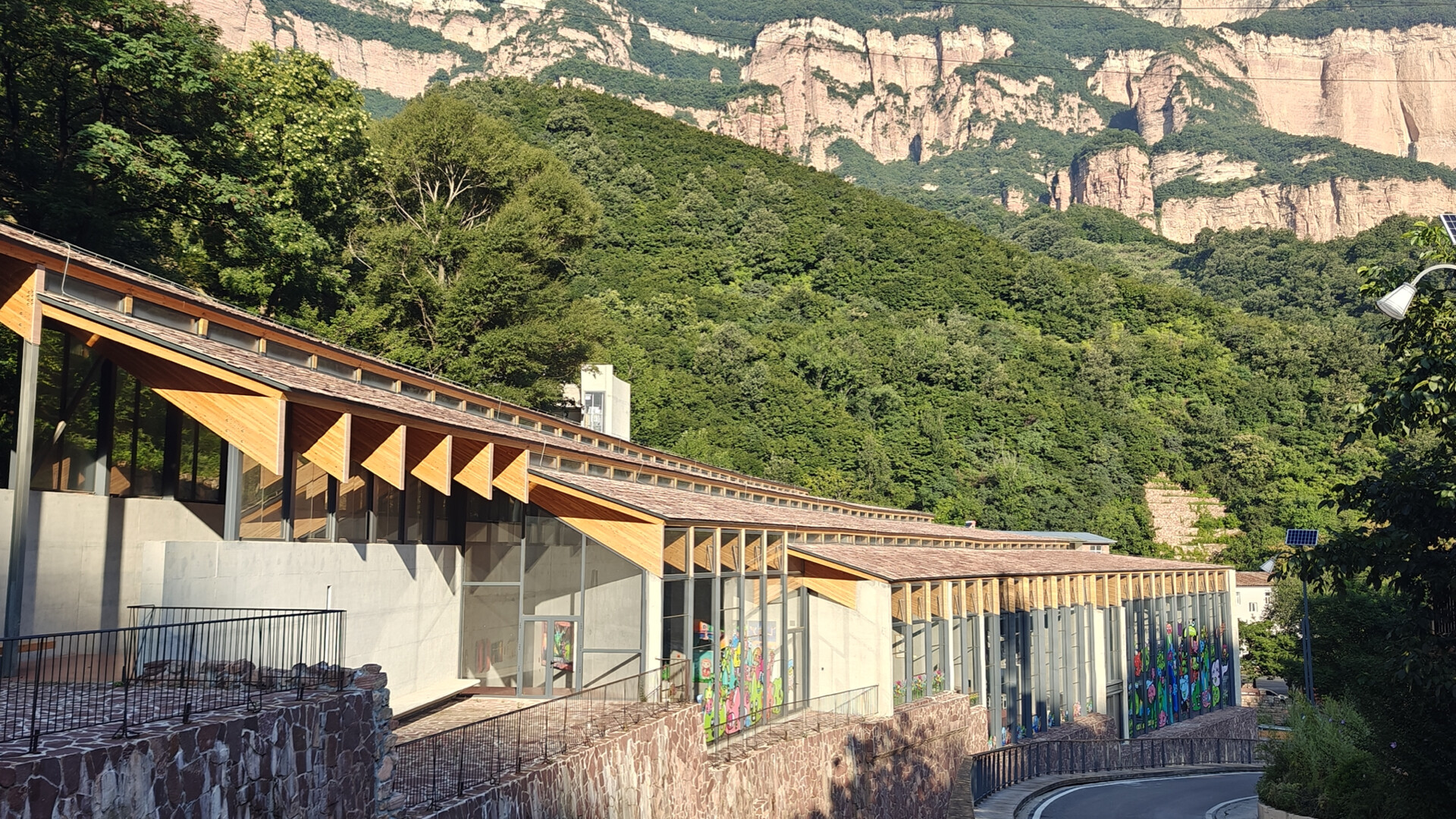
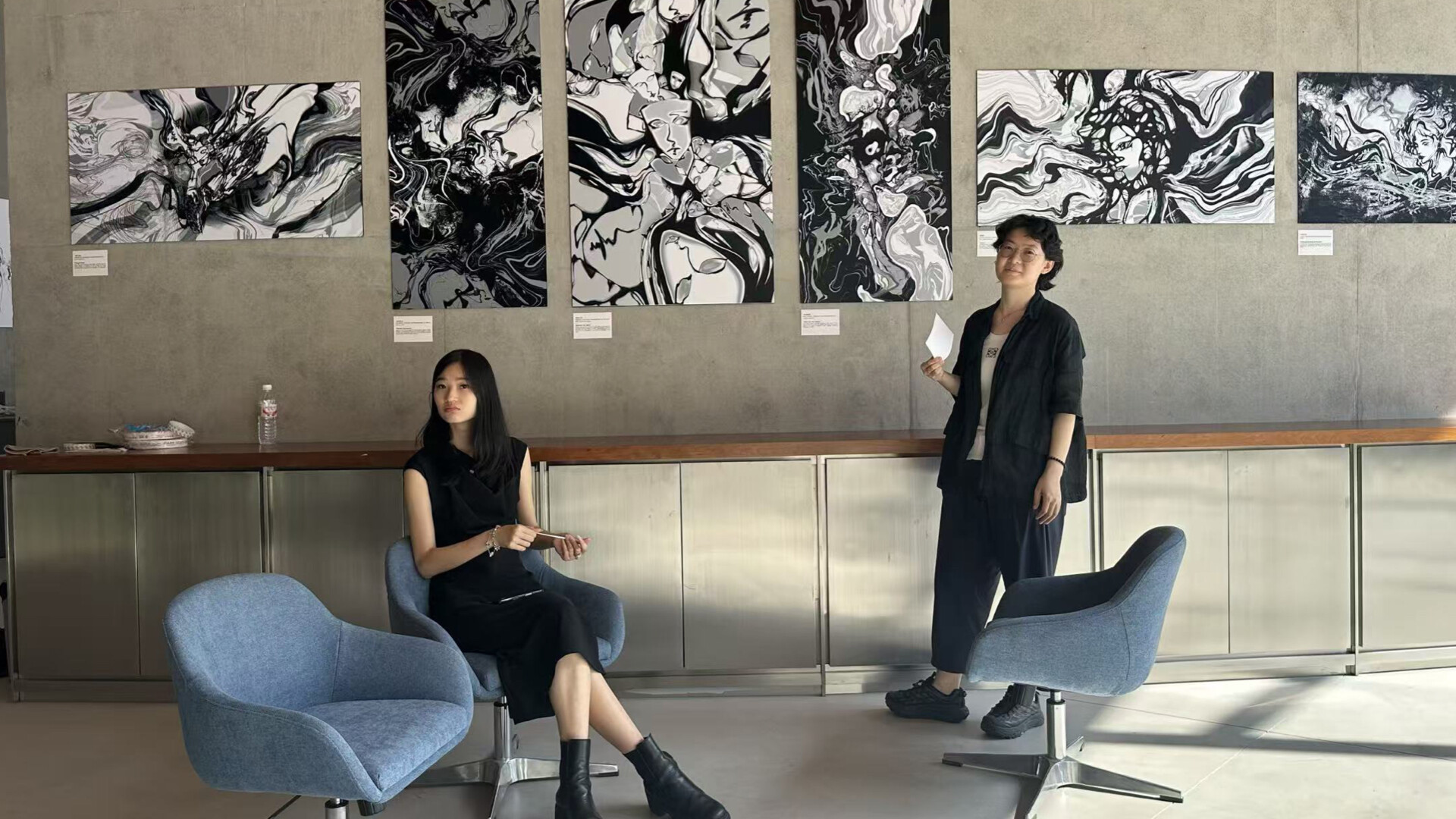
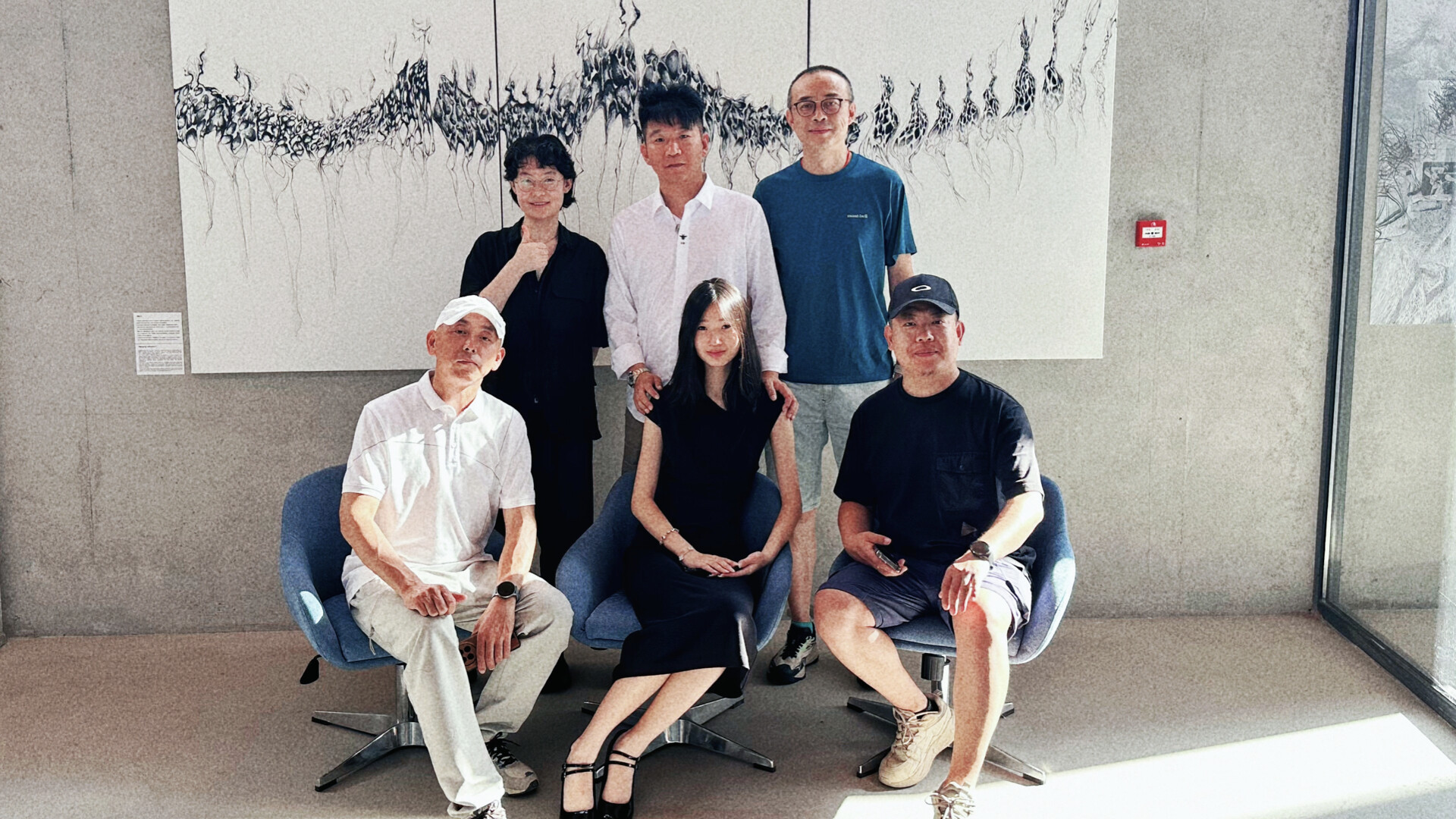
On 2026/8/11, the "Alienation" solo exhibition by young artist Liang Jiayi officially opened at Yan Art Museum in Zanhuang County. The exhibition features 19 works, including digital paintings, acrylics, and 3D-printed sculptures, marking a second presentation of the "Alienation" series following its debut at Beijing Jintai Art Museum. Curated by Hou Xin from the Central Academy of Fine Arts and co-organized by Ted Education Group.
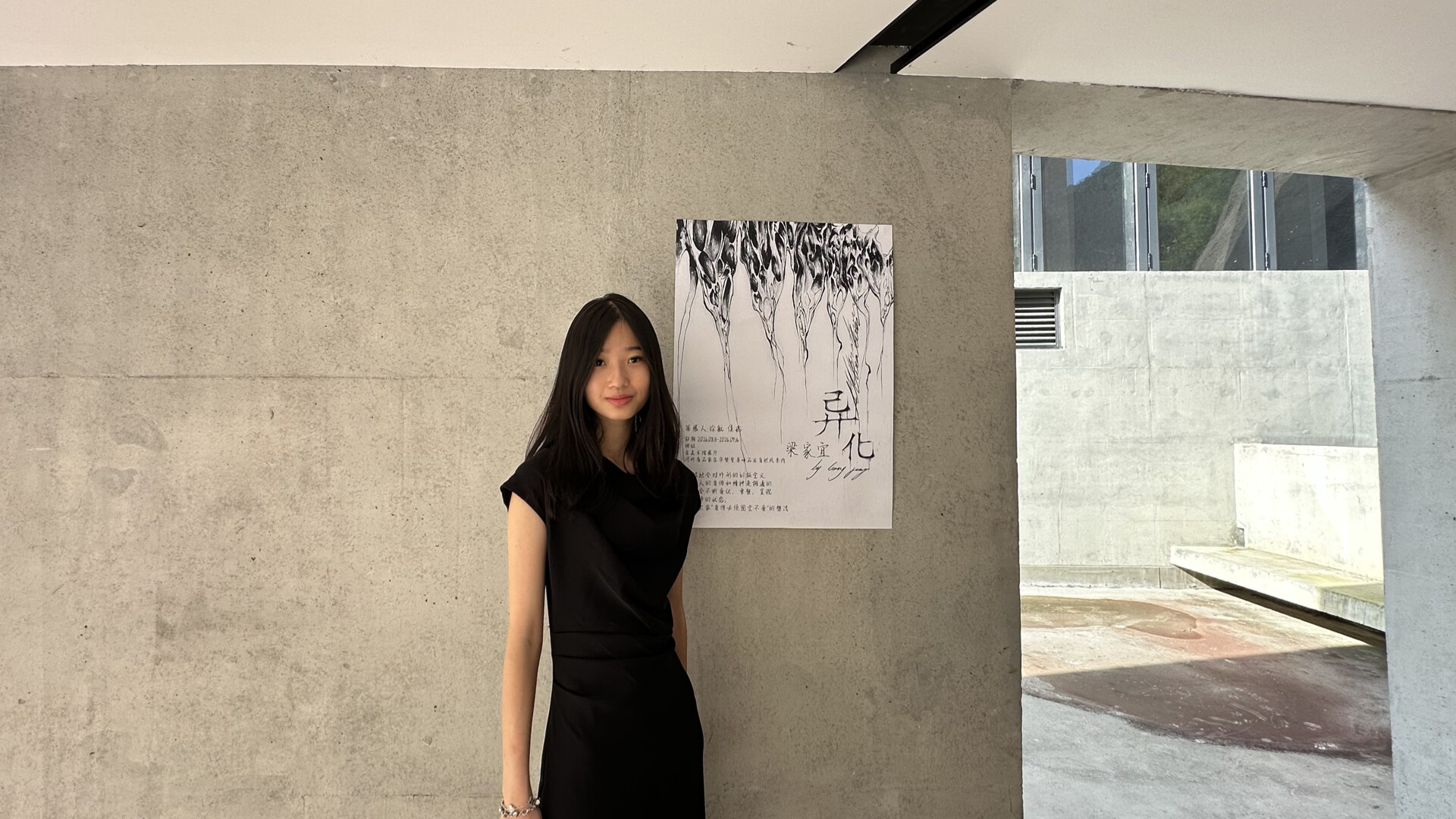
Jiayi Liang
A contemporary young artist born in Beijing, blending an Eastern cultural foundation with comprehensive European art education. Their journey spans both China and the West.Forge a unique cross-cultural creative language.
At age nine, she moved with her family to Barcelona, Spain, where she received her artistic启蒙 amidst the creative legacy of Gaudí and Picasso, graduating top of her class in fine arts. She later pursued advanced studies in design in Paris, immersing herself in Europe's contemporary art and fashion systems. Her life and education across Asia and Europe have naturally infused her work with a dual aesthetic: drawing on the Chinese literati tradition of negative space and ink wash, while embracing Mediterranean avant-garde directness and deconstructivist expression. This fusion creates a unique artistic voice that blends Eastern poetic sensibility with Western innovation.
During her artistic practice, she has been actively engaged in the intersection of international art and fashion.Collaborated deeply with top-tier global luxury brands and premier art museums across New York, London, Milan, and Paris. Partners include luxury houses such as Ralph Lauren, Alexander McQueen, Chanel, Maison Margiela, and Fendi, as well as world-class institutions like The Metropolitan Museum of Art, V&A, the Louvre, and the Musée des Arts Décoratifs de Paris. This extensive experience provides deep insight into Western artistic traditions and the fashion industry's creative logic, establishing a solid foundation for our cross-cultural artistic expression.
Her core practice revolves around the physical, spiritual, and identity reconstruction of the body, drawing inspiration from Deleuze and Guattari's philosophy of the "Body without Organs." She transcends societal norms that rigidly define bodily form, gender, and appearance. Rejecting the notion of the body as a fixed, closed container, she reimagines it as a fluid, ever-generating force capable of autonomous expression. Her work employs ink washes and deconstructed lines as its primary visual language, set against a monochromatic base with dark red textures to weave flowing abstract forms that evoke the human body, mountain ranges, and neural networks. Expanding beyond traditional boundaries, she experiments across diverse mediums—painting, digital art, and 3D sculpture—to merge human curves, wings, and fluid surrealism. These elements materialize the alienated state of psychological tension, transformation, and liberation, exploring the infinite possibilities of the mind-body relationship.
Previously held his first solo exhibition at the Centre d'Art Santa Mònica in Barcelona, establishing a voice for European art. In 2026, he returned to China with a major solo show titled "Alienation" at the Jintai Art Museum in Beijing, building a bridge for equal dialogue between Chinese and Western contemporary art from a cross-cultural perspective. This exhibition marks the start of his domestic tour; the "Alienation" series will continue to be presented at multiple institutions, including the Yan Art Museum.She articulates the unique philosophical insights and visual expression of China's young artists through an artistic language rooted in Eastern traditions yet engaged with global discourse, contributing meaningfully to the contemporary art world.
Co-created with world-leading fashion and art institutions
During her advanced studies and time living in Paris and New York, Liang Jiayi significantly expanded her creative horizons. She has collaborated closely with top global fashion brands and cultural institutions, including Ralph Lauren, Tom Brown, and the Metropolitan Museum of Art (MET) in New York; Richard Quinn, Erdem, Alexander McQueen, Burberry, and the V&A Museum in London; Fendi, Ferragamo, Armani, and Valentino in Milan; and Saint Laurent, Maison Margiela, Alaïa, Givenchy, Chanel, and Elie Saab in Paris. She also contributed to artistic projects at the Louvre, the Musée des Arts Décoratifs, and Palais Galliera (Paris Fashion Museum).
These cross-industry collaborations deepened her understanding of how the Western fashion industry and classical art institutions operate, laying a solid practical foundation for the "East meets West" approach featured in her solo exhibition.
The "Alienation" series began with Liang Jiayi's cross-cultural observations during her stay in Barcelona.
Moving from Beijing to Barcelona at age 9, she grew up constantly shifting identities between two languages and cultures—a journey that became the starting point for her reflection on "alienation." In her view, alienation is not a purely negative term but rather a normal state of continuous self-generation: as people continually become other versions of themselves, they experience tearing apart and reshaping, ultimately moving toward reconciliation.
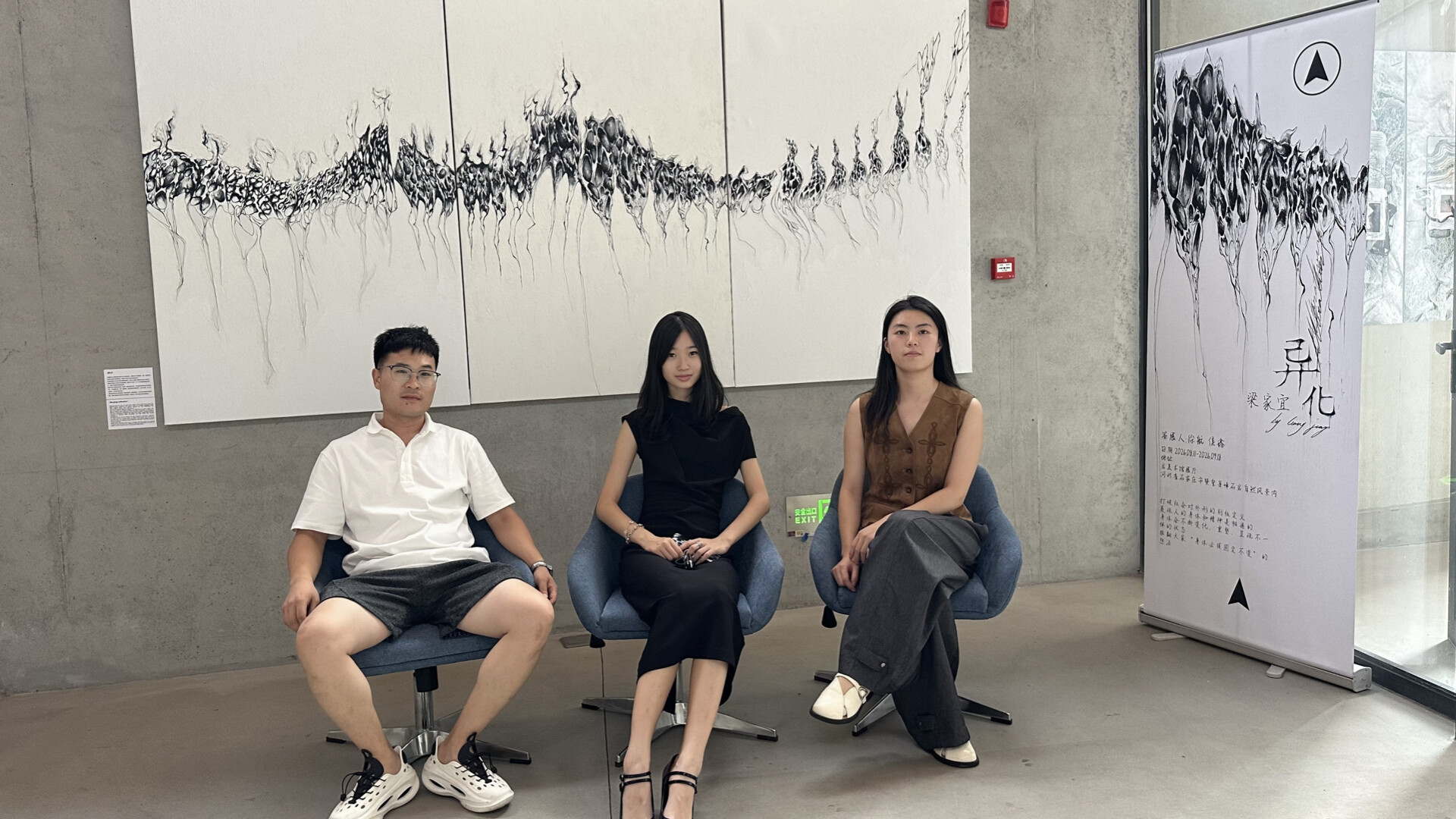
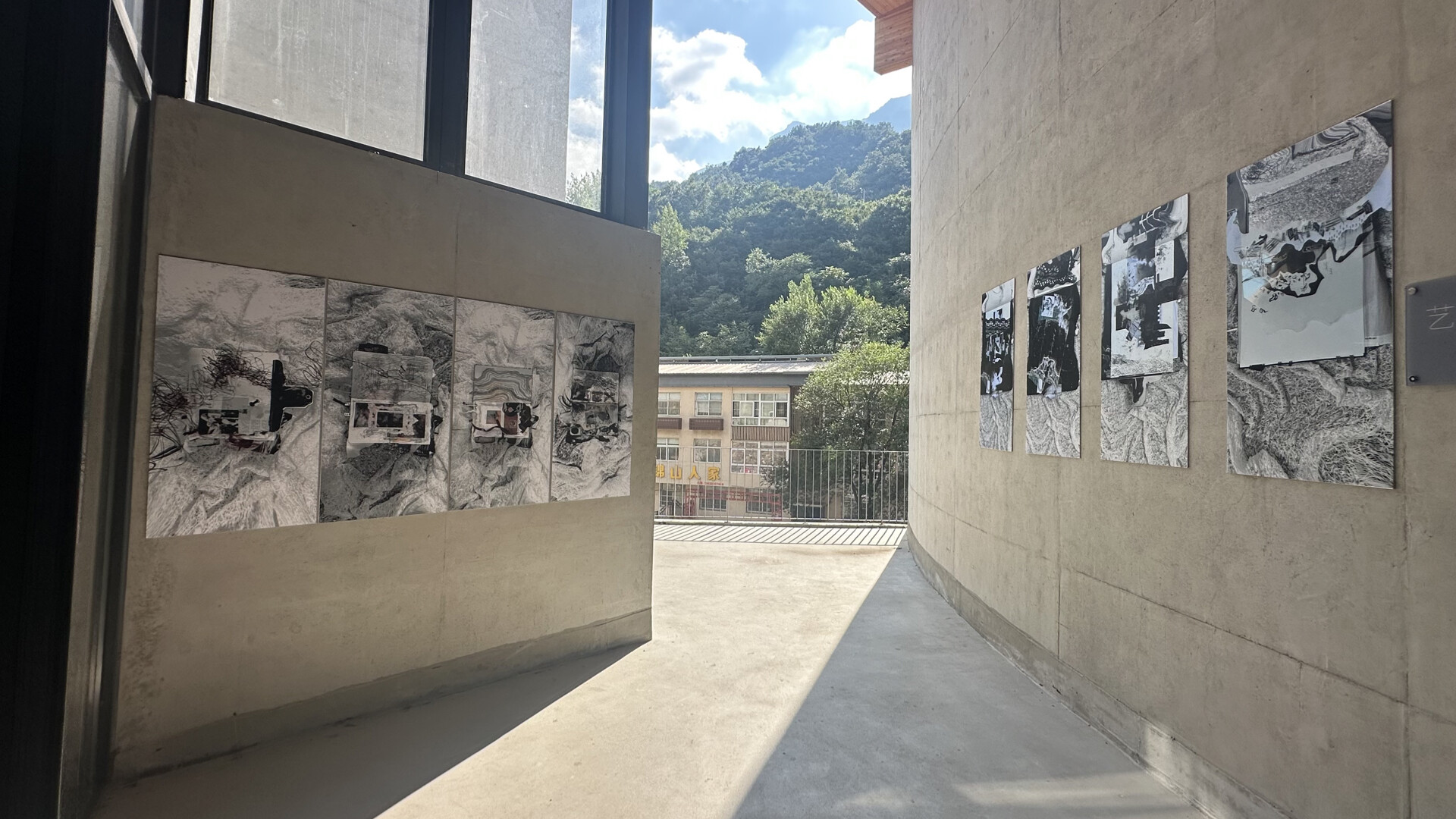
The 19 works in the exhibition form a complete narrative arc, progressing from body and identity to social gaze. The opening piece, "Studio," sets the tone of "generation and transformation" for the series; in "Liquid Faces," features dissolve and reconfigure within fluid brushstrokes, illustrating how emotion transcends physical appearance. "Will-o'-the-Wisp" depicts lingering traces of past selves at the edges of consciousness—this is the artist's most personal work: "All others began with a concept before execution; this one found me first."
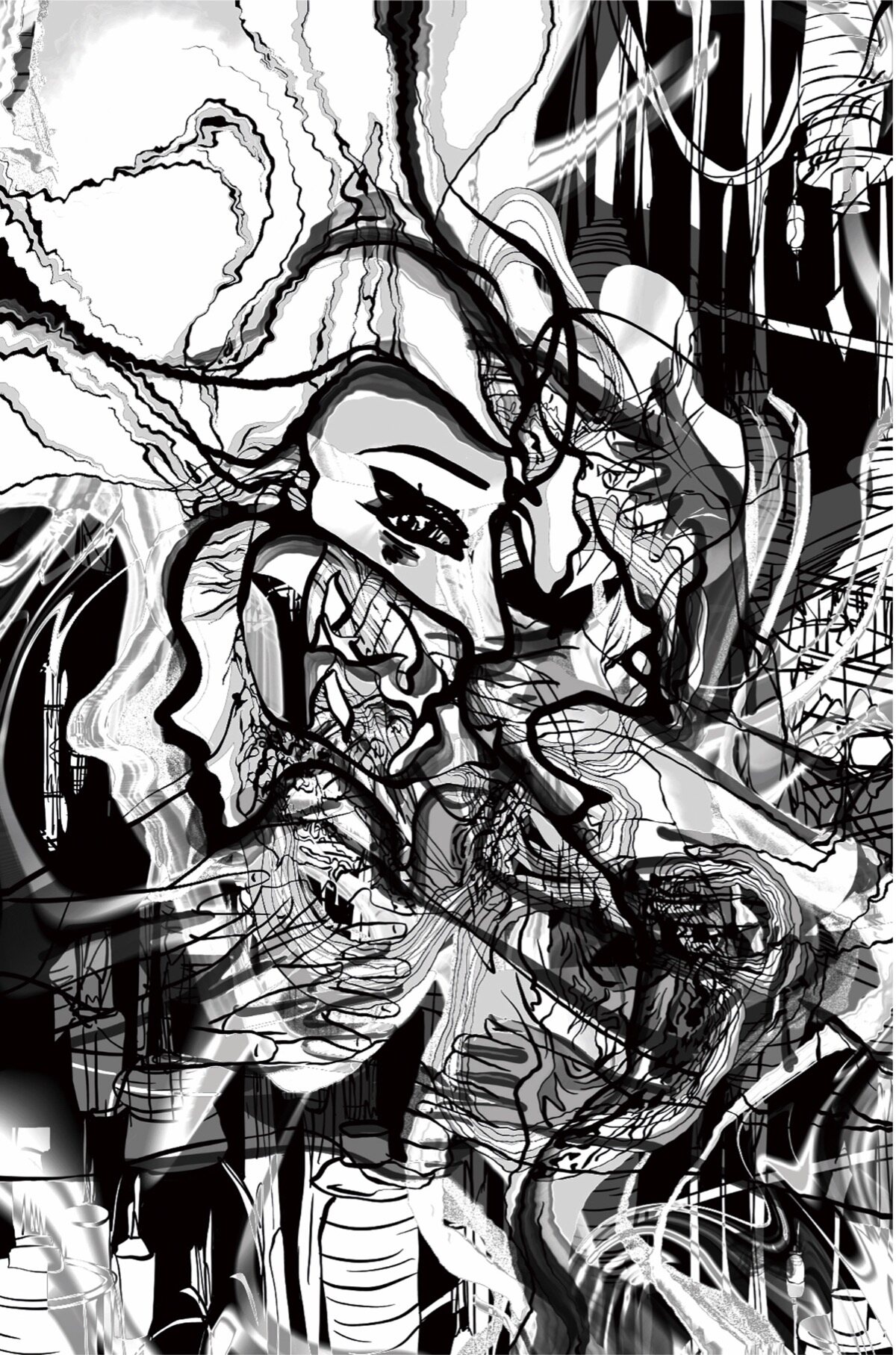
Work: "Liquid Face"
The series' only sculpture, "Chimera," is rendered in 3D printing to materialize the contemporary condition of bodily fragmentation and alienation. The final work, "Fusion," depicts the subtle transformation of the body and self as individuals conform to external expectations. In "Icarus," the myth of wax wings reflects the struggles young women face in forming their identity—leaving viewers to ponder whether wings signify freedom or a path to falling.
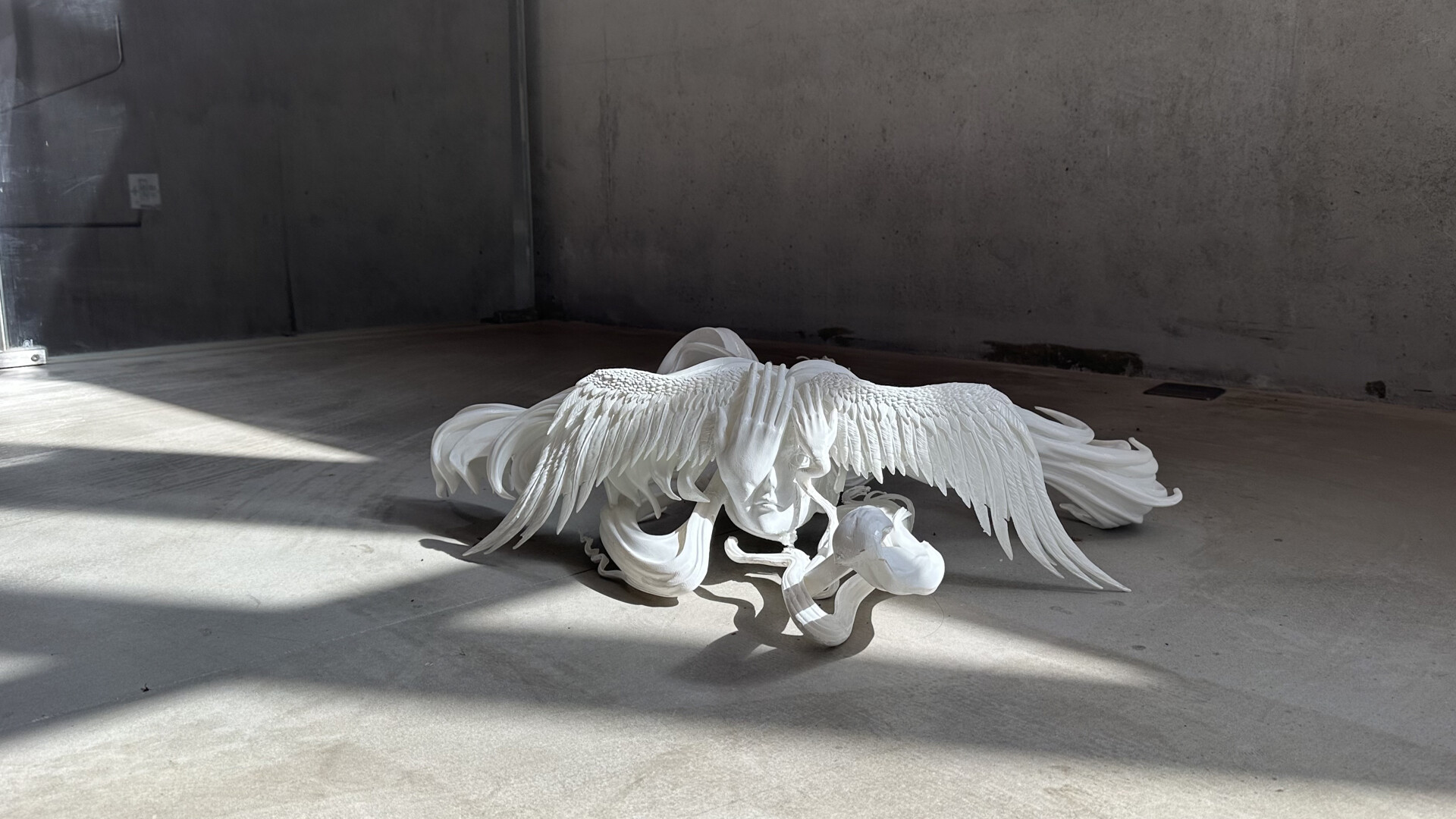
Work: Chimera
From generation to follow-up questions, 19 works trace not only the alienation of the body but also a person's complete journey confronting self-transformation—fear, struggle, tearing apart, and ultimately, acceptance. Liang Jiayi says alienation is not the end; reconciliation is. The first person to reconcile with is oneself: acknowledging "I am becoming someone else" without fear. The creation process of this series itself stands as witness to her journey toward reconciliation.
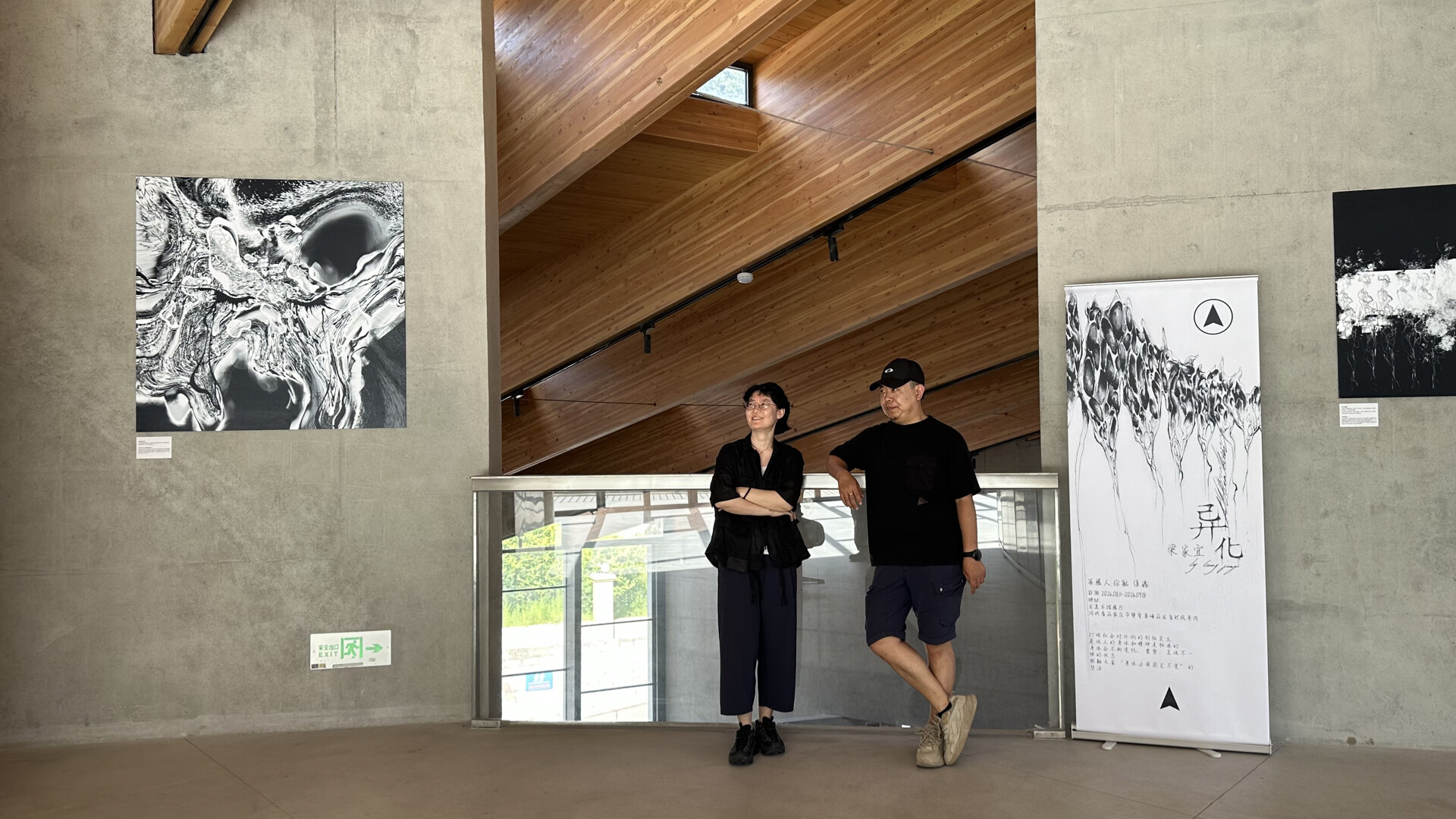
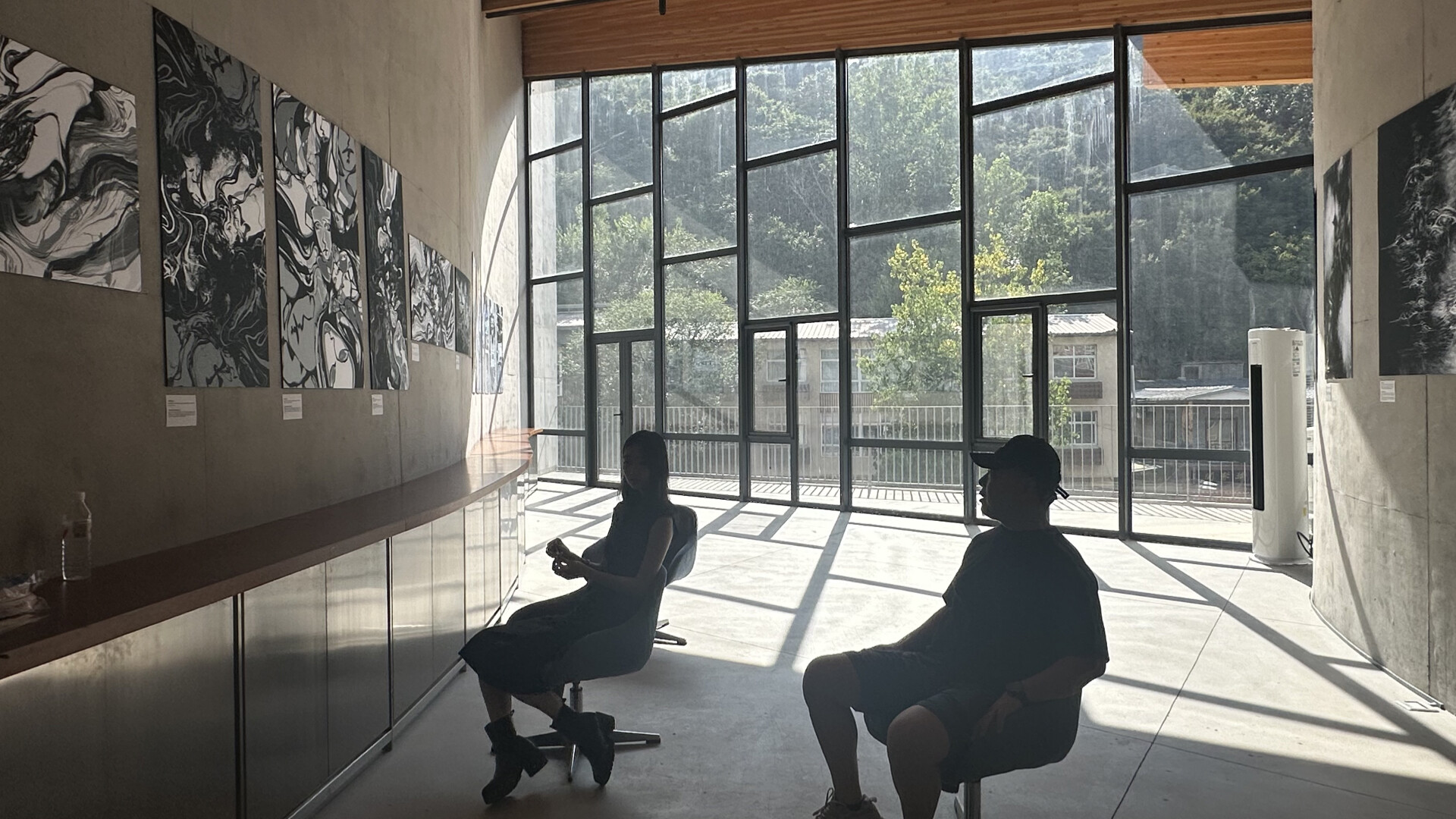
Regarding the selection of Zhangjiayan Art Museum for the traveling exhibition, Liang Jiayi stated that contemporary art should not be confined to professional venues in Beijing, Shanghai, and Guangzhou. She hopes that visitors from Zhangjiayuan can come in without needing any theoretical background and still feel a connection—something within the paintings speaking directly to them. The landscape of Zhangjiayan subtly emerges through the architectural gaps of the museum, creating a silent resonance with themes of alienation and reconciliation displayed inside the galleries.
This conversation will continue until 9/18.